At the end of the day, every entrepreneur wants more time, less stress, more revenue and better results. The most important prerequisite for this is to take a step back from day-to-day business and focus on the bigger picture. Investing two to three days in carefully implementing your annual plan can save you up to 250 hours of time that would otherwise be spread out over the year, and also make your work more relaxed. Thus, the most important goal of the seminar was already achieved with participation: intensive engagement with the coming financial year and, as a result, more freedom for new ideas.
Franz Josef Isensee outlined the ideal result of annual planning:
- Strategy is clear and stable
- Challenges have been identified
- Potential for improvement has been uncovered
- Goals and key figures have been set
- Resources and budgets have been planned
- Responsibilities have been reviewed and defined
- Team motivation is high
- Measures and schedule have been set out in writing
- Feedback/monitoring is transparently established
It is important for management to always maintain an overview without losing sight of the ‘playing field’. The ‘big picture’ and the measures taken during the financial year must be in harmony!
Annual planning involves, first, looking back and asking the following questions: What went well? What should not happen again? Second, it is essential to look ahead: Where are the challenges, structured according to company and market issues? These include changes in cost conditions, such as the increase in the minimum wage from 1 January 2026 and its impact on overall salary levels, cost increases in the energy sector due to the increase in CO2 tax, and opportunities for future investments due to the investment booster since summer 2025.
With regard to the corporate goals for 2026, Franz Josef Isensee quoted Michelangelo: ‘The greatest danger for most of us is not that our goal is too high and we miss it, but that it is too low and we achieve it!’ In other words: goals should be ambitious, there should be development! To this end, great importance must be attached to the basic principle of successful change management: First, the goal is set – for example, a change expressed in figures. Then the right measures are designed to achieve the goal. This was explained in practical terms using examples in the seminar. Unfortunately, in practice, the poorer logic often prevails: ‘Let's just get started and see where we end up.’
Comparative groups can be used to identify potential within your own company. These are available through the ZBG's business comparison, through competition monitoring and, above all, through close exchange with your team, which is often very close to the customer.
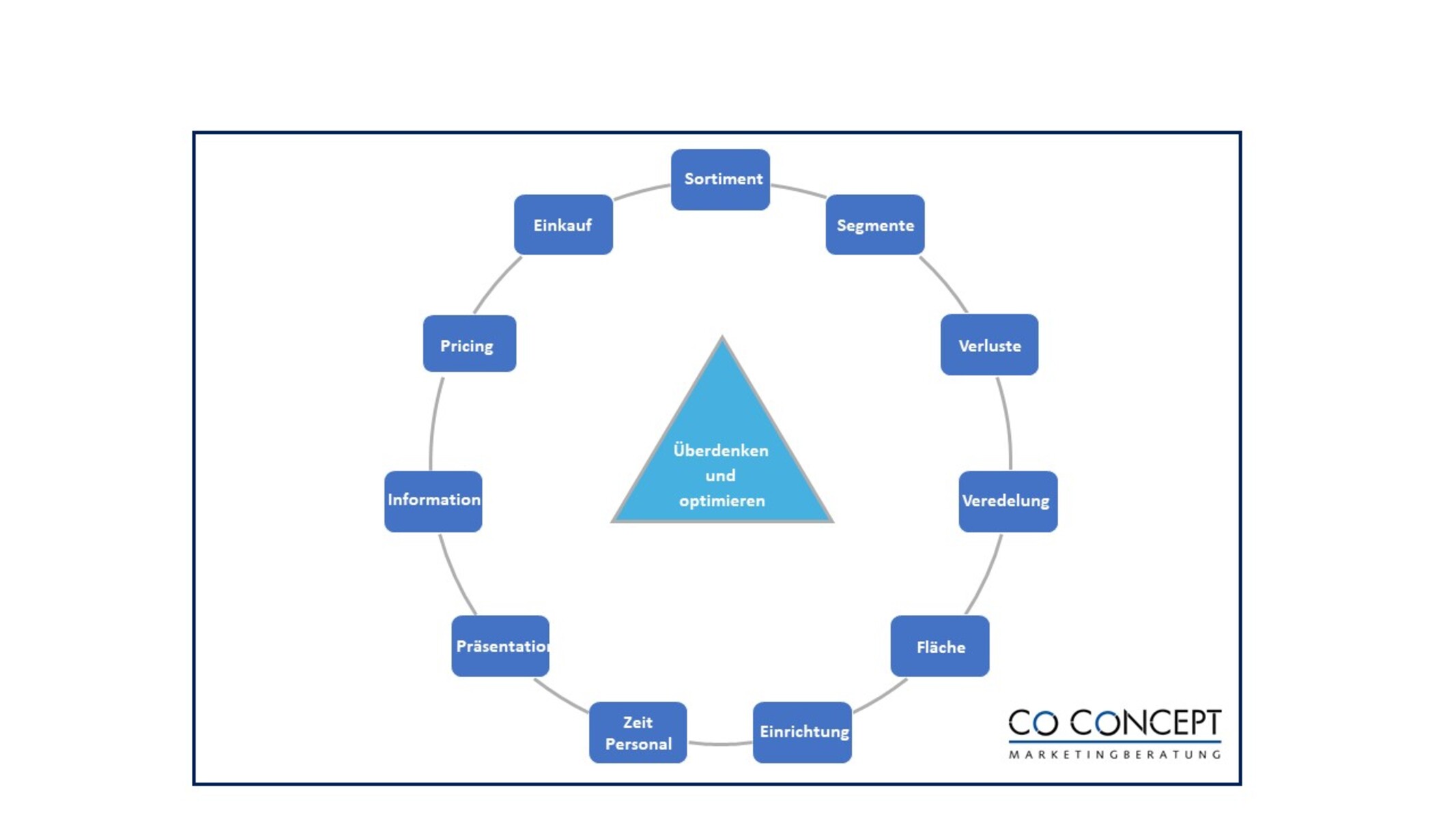
The ‘optimisation cycle’ for the respective segment is suitable for the systematic search for improvements.
Franz Josef Isensee defined four guiding principles for cost and revenue planning:
Growth: Without special measures, only stable, slightly increasing sales can be expected.
Costs: Without ‘intervention’, costs often rise faster than sales.
Investments: Investments are necessary – simply reducing costs is not enough as a strategy for the future.
Results: Declining or negative results are often difficult to reverse, and the measures required are then much more ‘unpleasant’ than permanent ‘adjustments’.
The scenario tool of the horticultural business comparison is particularly suitable for planning and profit and loss statements. Based on the previous year's profit and loss statement, the new planning data can be entered to produce a profit forecast for the next and subsequent financial years. The impact on the annual result becomes apparent. Those who do not want to accept this can then start afresh with their income and cost planning.
However, AI now also offers support for annual planning and advice on what to do to maintain results in the new financial year. Franz Josef Isensee also presented practical results on this topic.
If you want a completely customised approach, CO CONCEPT will develop your annual plan in a workshop for garden centres and retail nurseries. The results will include market share and potential analysis, benchmark results, sales and SWOT analysis, and revenue and cost planning. Talk to us about your individual Future Day, which can be held exclusively for company management or as an employee workshop.
Securing the future | Management expertise | Setting objectives